Imagine descending beneath the surface, hearing only the rhythmic sound of your own breathing while suspended in total weightlessness. For many, taking that first breath underwater is a transformative experience that changes how they see the ocean forever.
The ocean covers more than 70% of our planet, yet most people only experience it from the dry shore. Becoming a certified scuba diver is your personal key to unlocking the remaining three-quarters of the Earth. Enrolling in an open water scuba diving course is an excellent first step for anyone who wants to explore the underwater world safely.
Diving is far more than just a tropical vacation activity; it is an empowering discipline rooted in physics, physiology, and precise body control. If you are ready to venture beneath the surface, the Open Water Diver course is your official gateway to a lifetime of adventure. A structured scuba diving certification course helps beginners develop the essential knowledge and practical skills needed to start their diving journey.
What Is the Open Water Course?
The Open Water Diver course is the world's most widely recognized scuba certification. Operating under the rigorous safety standards of international training agencies like PADI, it qualifies you to plan and execute dives with a certified buddy to a maximum depth of 18 meters (60 feet) without direct professional supervision.
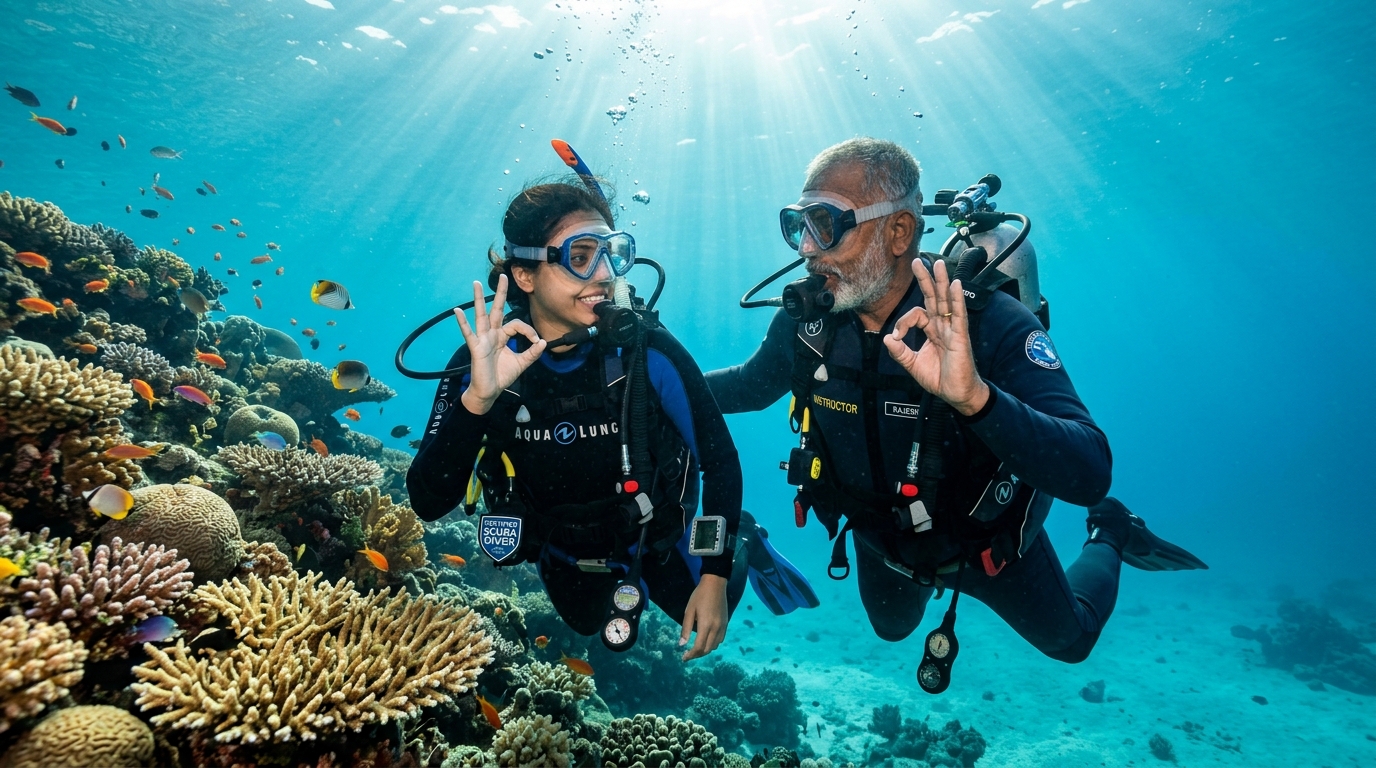
Unlike a brief resort "discover scuba dive" where an instructor holds your tank throughout the experience, this course transforms you into an autonomous, knowledgeable diver. You learn to assemble your life-support equipment, calculate decompression margins, manage emergency protocols, and navigate marine environments responsibly.
The Three Core Modules of Your Training
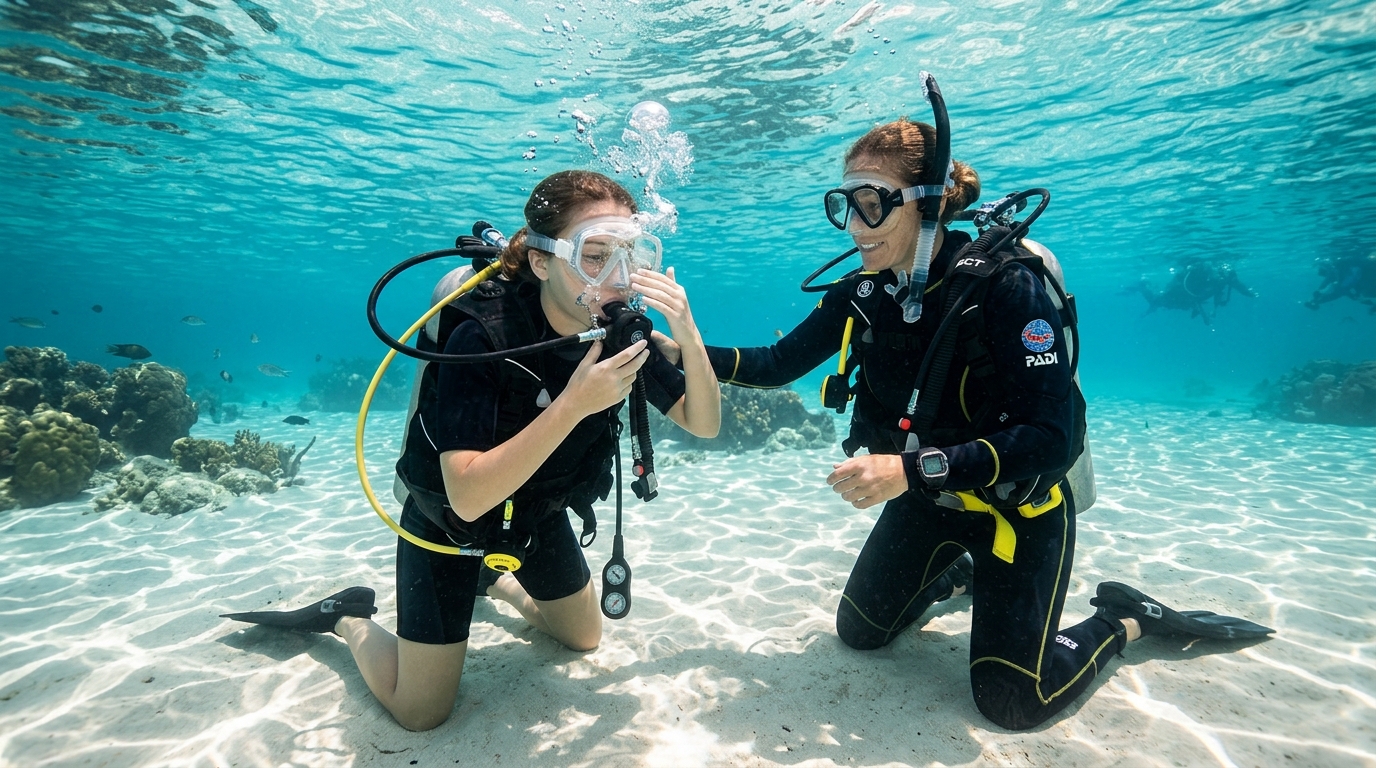
Your scuba diving course is divided into three comprehensive, performance-based sections designed to build confidence progressively:
1. Knowledge Development (Theory & Physics)
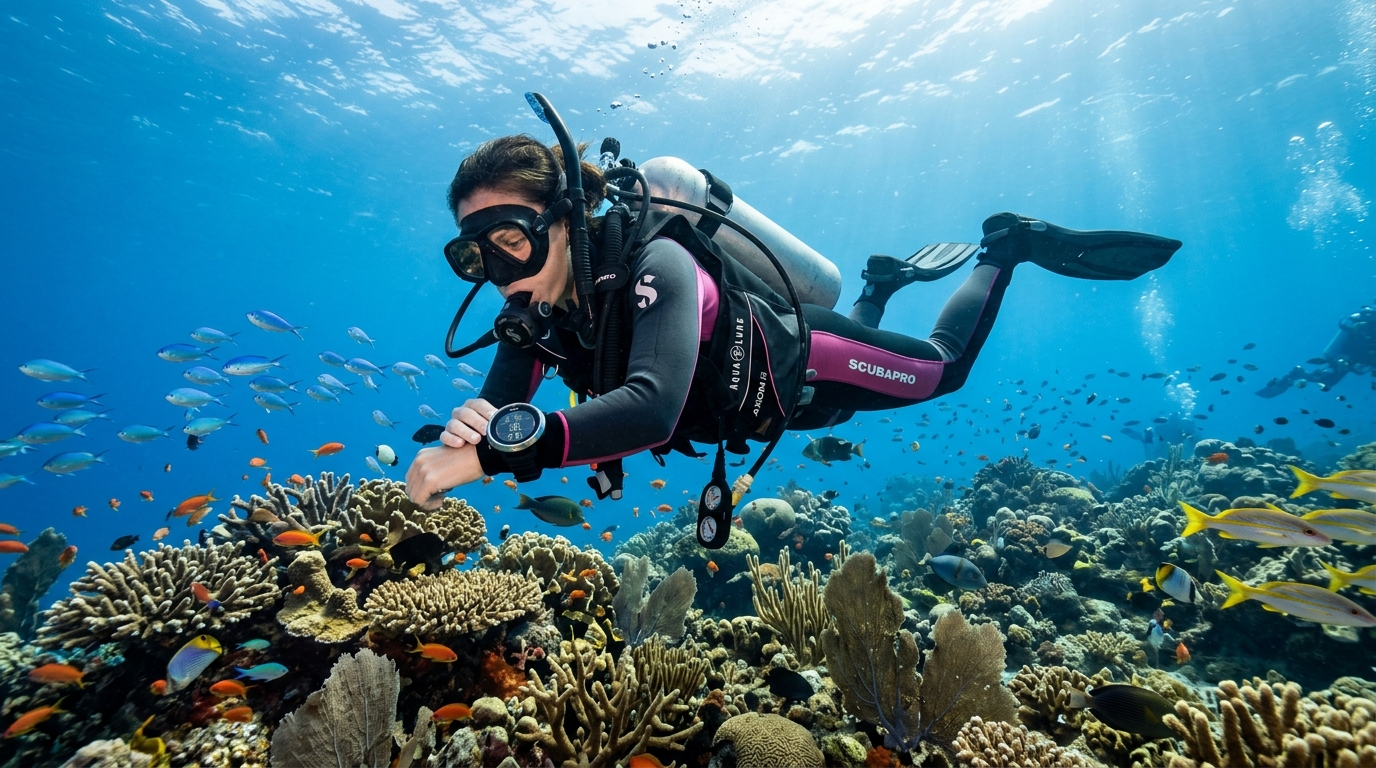
Understanding dive theory is essential for staying safe underwater. You will learn how water pressure affects gas volume (Boyle's Law), how nitrogen absorbs into tissues, how to prevent barotraumas by equalizing airspace, and how to plan dive profiles with a dive computer. Most students complete this online via interactive eLearning before leaving home.
2. Confined Water Dives (Pool or Calm Lagoon)
In a swimming pool or crystal-clear shallow lagoon, you take your first breaths underwater and master vital survival skills: clearing a flooded mask, recovering an out-of-reach regulator, hovering in neutral buoyancy, and performing controlled out-of-air ascents with an alternate air source.
3. Open Water Dives (Ocean Exploration)
The culmination of your training consists of four open-water ocean dives over two days. Here, you apply your skills in the real ocean environment while exploring coral gardens, cruising past sea turtles, and proving your readiness to your instructor.
The Golden Rule of Scuba Diving
Never hold your breath! Because ambient pressure decreases as you ascend toward the surface, air in your lungs expands. Continuously breathing normally and never holding your breath eliminates the risk of pulmonary barotrauma and keeps you completely safe.
Course Requirements & Swimming Prerequisites
You don't need to be an Olympic athlete to become a diver, but you do need basic water comfort and health:
- Minimum Age: 10 years old for Junior Open Water Diver (depth limit 12m for ages 10-11, 18m for ages 12-14); 15 years old for standard Open Water Diver.
- Swimming Ability: A continuous 200-meter swim (any stroke without time limits) or 300 meters with mask, snorkel, and fins.
- Watermanship: A 10-minute continuous water tread or float without flotation aids.
- Medical Clearance: Complete standard medical questionnaire confirming cardiovascular and respiratory fitness.
Earn Your Open Water License in Paradise
Learn to dive in Lakshadweep with Lak Sea Adventures. Pristine atolls, 30m visibility, calm warm lagoons, and 5-Star PADI certified instructors waiting for you on Agatti Island.
Why Lakshadweep Is the Ideal Training Ground
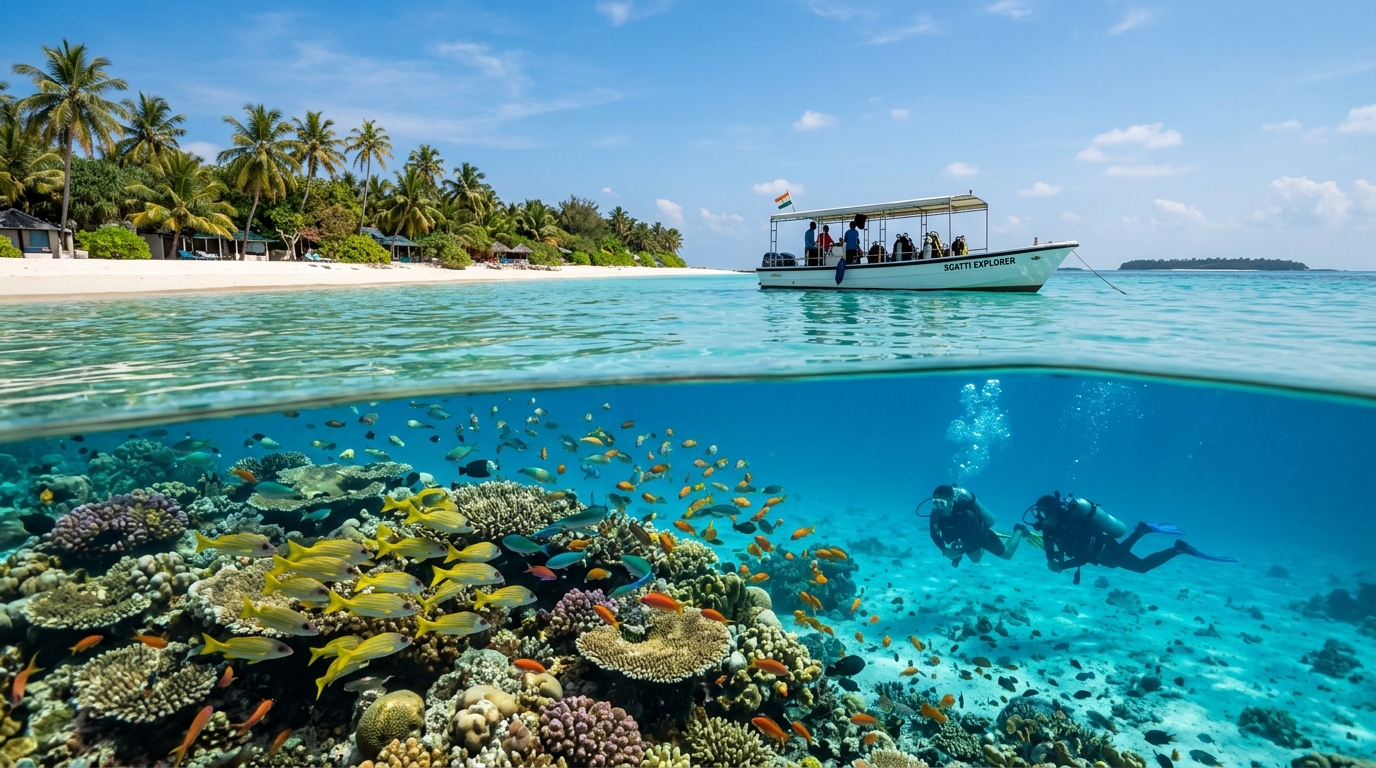
Where you learn to dive matters. In India, Lakshadweep provides unmatched conditions: turquoise calm lagoons sheltered by barrier reefs, 25-35 meters visibility, and balmy 28°C water temperatures. Training here feels effortless compared to turbulent, cold-water environments.
Frequently Asked Questions
The PADI Open Water Diver course is the world's most recognized entry-level scuba certification. It qualifies you to dive independently with a certified buddy to a maximum depth of 18 meters (60 feet) worldwide.
Typically 3 to 4 days. You can complete the academic theory via eLearning prior to your trip, allowing you to spend your vacation days immersed in pool training and open-water ocean dives.
No. You only need basic watermanship skills: swimming 200 meters continuously (or 300 meters with mask, snorkel, and fins) and treading/floating water for 10 minutes.
Children aged 10 to 14 can earn the PADI Junior Open Water Diver certification. At age 15, junior certifications automatically upgrade to the adult Open Water Diver certification.
Lak Sea Adventures provides all necessary equipment: mask, snorkel, fins, wetsuit, buoyancy control device (BCD), regulator system, submersible pressure gauge, and dive computer.
Yes. Soft contact lenses are safe for diving. Prescription dive masks with corrective lenses are also widely available.
The certification limits divers to a maximum depth of 18 meters (60 feet). Junior Open Water divers aged 10-11 have a limit of 12 meters (40 feet).
PADI certifications never expire and are valid for life. However, if you haven't dived for six months or longer, taking a short PADI ReActivate refresher is strongly recommended.
Lakshadweep's atolls offer 30+ meter water visibility, calm lagoons with no heavy surf, 28°C water temperatures, and teeming coral reefs directly off the beach.
Contact Lak Sea Adventures via WhatsApp at +91 7994471129 or email divewithlaksea@gmail.com. Our team assists with island entry permits, resort accommodation, and course scheduling.